Tips to train a dog to stop being aggressive:
Most of the time, when you see an aggressive dog, he wasn’t born that way. The owner of this type of dog may not fully understand how to train his dog. This lack of training often leads to aggressive behavior as the dog responds to situations using its instincts because it was never taught differently.
Learn why this happens and how to stop your dog from aggressive behavior.
Why are some dogs aggressive?

Dogs become aggressive for many reasons. These reasons can vary widely with each dog. It helps to focus on the situations that cause your dog to become aggressive, so you know how to train him.
fear
Dogs can become aggressive if they feel cornered or trapped and cannot retreat from what they perceive to be a threat. Dogs that have been mistreated, abused or not properly socialized can also exhibit fear-based aggression.
Possession aggression, also known as resource guarding, is one of the most common causes of aggression in dogs. Many dogs feel the need to protect their possessions (food, toys, beds, crates, etc.) whether or not there is a threat. Dogs can become aggressive if someone comes near their sacred objects or places. Food guarding is a particularly common form of possessive aggression.
Territorial aggression
Some dogs are territorial by nature and feel the need to defend their space (your home or yard) from what they perceive as intruders. For some dogs, this may be limited to strangers, while others may display territorial aggression toward friends and foes. Dogs are usually not territorial until they are adults.
Protective aggression
Dogs are naturally social, pack animals and feel the need to protect their pack members. Some dogs may exhibit aggressive behavior when they feel a family member, friend or companion pet is in danger.
Dominance aggression
Dogs sometimes exhibit aggressive behavior as a show of dominance. Dominance aggression, also known as status-seeking aggression, can sometimes be seen in interactions with other dogs. As pack animals, dogs can create a sense of hierarchy among the pack. And a dog who sees himself as the alpha dog may feel the need to show he’s in charge.
Signs of aggressive behavior
If you pay attention, you will notice some warning signs that your dog is becoming aggressive before his behavior becomes serious. Sometimes, these behaviors follow an incremental progression as listed below.
- The black dog barks through his teeth.
- To become still and rigid
- Tail between legs
- The ears were pushed back.
- A tightly closed mouth or lips protruding over the teeth
- Bearing teeth
- Aggressive eye contact
- High speed
- Growling, staring or barking
- Lungs towards a person or other animal
- “Muzzle punch” (punching a person or other animal with its nose)
- Nap lightly
- A bite that tears the skin or causes bruising.
- A bite that causes puncture wounds.
- Repeated cutting in rapid succession
An owner who fails to notice signs of aggression when they develop will soon find themselves with a completely out-of-control dog. This is the owner’s responsibility and does not mean the dog is a “bad dog”. That just means it’s time for some aggressive dog training tips to help you sweeten your dog.
How to Train a Dog to Be Less Aggressive
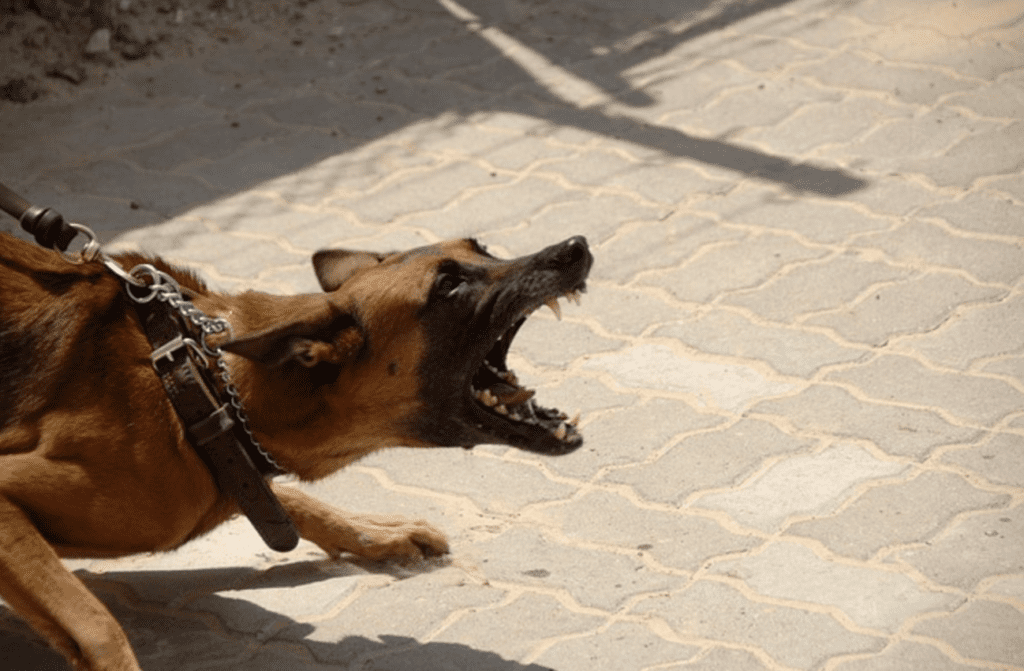
Once you recognize the signs of an aggressive dog, it’s important to understand how you can reduce or eliminate its aggressive behavior. Here are some of our tips on how to handle an aggressive dog.
Consider vocational training.
At least at first, aggressive dog training is best left to expert trainers because the causes and behaviors can vary greatly. Ultimately, it’s in your best interest to consult with an expert before attempting to train your dog yourself – especially if you think your dog might harm someone.
If you can’t afford many hours of professional training, you should consider at least one or two sessions where a trainer can give you tips on how to progress on your own. This saves you and your dog from major problems down the road.
Another option is to sign up for an affordable online aggressive dog training course that can walk you through many of the problems you are facing and give you actionable steps to correct your dog’s negative behavior. Measures can be provided. We recommend Doggy Dan’s Online Training which targets aggressive dogs.
How to find a good trainer
If you don’t know a dog trainer in your area, be sure to ask your friends and neighbors. Your veterinarian can also give you some recommendations. Local vets deal with questions about aggressive dogs all the time, so they’ll know where to take you. And check out our tips on finding the best dog trainer for you and your dog.
Use positive behavior correction, not punishment.
One of the most important things to remember when training your dog for aggressive behavior (and just general training) is to stay calm but firm. Your dog can sense if you are angry or nervous when you are interacting with him.
Many dog owners punish aggressive dogs with threatening behavior. Instead of the dog learning to behave from this punishment, they learn that aggression is an acceptable response.
Aggressive dog barking
Remember that some aggression stems from fear. When you hit your dog, you can create fear, which can cause the dog to stop the unwanted behavior. But you also base aggression to be acceptable. Sooner or later, the fear you’ve developed may manifest in aggressive behavior that is beyond your control. Instead, use specific methods to teach your dog what is acceptable and what is not.
Tools to help with dog aggression
E-collars, pinch collars, and muzzles can be beneficial when it comes to training your dog. These may seem like harsh forms of punishment at first, but, in some cases, they are more effective than regular collars.
Prong collars
Prong collars are among the best tools a trainer can use. A normal collar will strangle your dog if you pull on it. A prong collar will cause superficial discomfort like a puppy feels when its mother taps it on the back of the neck, indicating that the behavior is not acceptable. We recommend the Coastal Easy-On Dog Prong Training Collar.
Muzzles
A muzzle is a great tool to use if you have a dog that verbally snaps or intimidates other animals. This is often the case with shy dogs who become nervous in any situation. Ease your dog into new social situations a little at a time.
The muzzle can be used in social situations, but to properly train the dog, place it on the dog’s mouth for about an hour before a pleasant activity such as mealtime or playtime. The dog will then associate the muzzle with pleasurable activities and apply that feeling to social situations.
Practice and patience are key to success.
When you’re training your dog, be sure to reward good behavior. You can do this with a treat, a toy or a wonderful compliment. Be patient and introduce your dog to new ideas and settings a little at a time. If your dog is nervous around people, only do so for short periods of time and while you are under control (perhaps on a leash), reassure your dog the entire time.
Again, if you’re still having trouble, we recommend getting a professional dog trainer. There are even special courses for dog-on-dog aggression. And if all else fails, sadly, it may be time to think about re-homing your dog.
Aggression in Dogs: Warning Signs
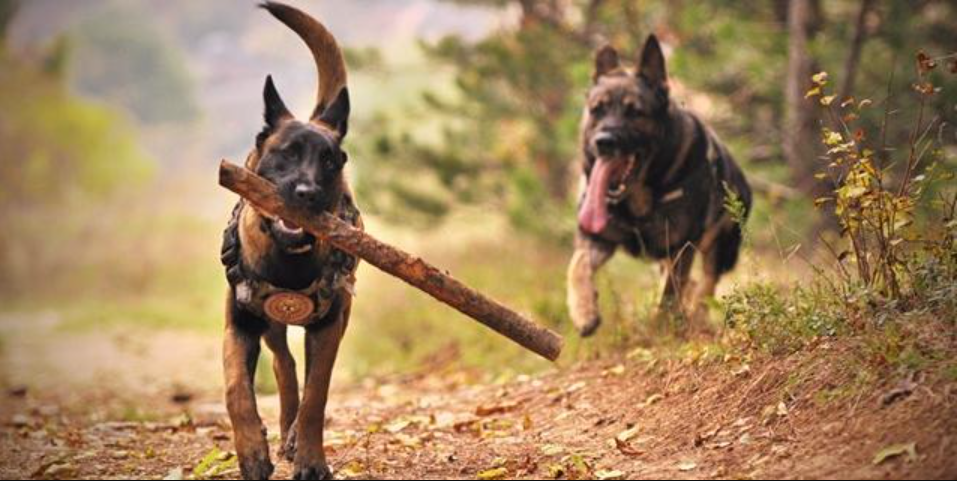
Aggression is a term used to describe a number of dog behaviors. Aggressive behavior usually starts as a warning, but can eventually lead to an attack, which is why aggressive dog training is so important.
Here are some ways that a dog may exhibit aggressive behavior:
- The groaner
- Stiff and/or standing still
- Teeth are showing.
- snarling
- A threatening or guttural bark
- Charging the lungs or man
- Turn away/bite lightly without applying pressure
- Teasing or pinching a person without leaving a mark
- A bite that causes bruising or puncture wounds.
- Repeated cutting in rapid succession
Reasons Dogs May Show Signs of Aggression Jack Russell Terriers are barring the other dog’s side teeth, while the owner holds both back.
There are many reasons why dogs kill. The American Society for the Prevention of Cruelty to Animals (ASPCA) states that dogs fall into one of the following categories of aggression:
- regional
- The adopter
- protective
- Afraid
- Antisocial
- defensive
- Coping with pain
Aggression can appear for a variety of reasons, but many are due to environmental factors. If you adopted your dog from a shelter, it may have been abused and certain triggers may prevent it. That’s why it’s so important to let him know he’s loved and create a safe environment for him.
If your dog is showing hostility after an injury, he is probably experiencing pain and the aggression will go away when the pain subsides. Be aware of this – while you want to do everything you can to help him, trying to ease his pain may cause him more pain and may cause him to lash out. If this happens, you should call your veterinarian immediately to find out how to get him properly examined.
A territorial dog may show signs of aggression when another human or animal approaches something it feels strongly about, such as a toy or a favorite human. In this case, your dog will need to be trained to respect boundaries and this protection is unnecessary. It’s a little more difficult because it’s an innate feeling of aggression, but sometimes it can be brought on by a certain upbringing. If your dog is used to having all the toys in the house with him, a new dog in the house can upset that balance and make him defensive. If so, work slowly to introduce him to the new changes gradually so he gets used to the idea over time rather than immediately.
Once you are able to identify why your dog is acting aggressively, you will be able to better personalize his training. Likewise, you may be able to remove or change its environment.
How to Train an Aggressive Dog
The first step in training an aggressive dog is to identify who it is aggressive towards. Does your dog show signs of aggression toward a particular family member or friend, strangers, or other animals? Also, as mentioned above, it is important to know what in his environment is making him angry.
Once you know what’s causing your dog’s aggression and what he’s aggressive towards, it’s time to work with a professional dog trainer. If you’re not sure which one to hire, contact your veterinarian for a recommendation. Also, according to the ASPCA, “some aggressive dogs behave the way they do because of a medical condition or complication.” Before starting any training, check with your vet to make sure your dog is healthy. A visit can help you identify any underlying health issues that may be causing your pet’s behavior.

Never ignore aggression.
This can be a good tip for a few reasons. Clearly, aggression is an undesirable trait that can hurt someone, or even your dog. If you notice aggression in a dog you don’t know, it’s best to leave it alone. If these traits are being exhibited by your own dog, it’s important to make sure you find out why, so you can take steps to reduce his aggression.
Another reason not to ignore aggression may be important to your safety. As your pack leader, your dog will have a natural defense mechanism that will protect you from anything it perceives as a threat. If you notice any signs of aggression in your normally well-behaved dog, it may be worth a quick investigation of your surroundings. Your dog has a better sense of smell and hearing than humans, so they will be able to detect danger very quickly. Whether it’s an intruder in your home or a wild animal nearby, your dog’s signs of aggression may actually just be warning signs to stay away from.
Finally, never punish your dog for aggression. Dogs do not understand punishment and are therefore more likely to act aggressively or act more aggressively when punishment is used. Instead, the best way to remove aggressive behavior is to reward good behavior. Sometimes your dog may need a little reminder that you’re in charge, but eventually he’ll respond best to resetting through reward-based training.
Why Your Dog Is Aggressive and How to Stop It
If your dog regularly growls, sneezes or bites, you may have an aggressive behavior problem on your hands. Aggression is one of the biggest reasons why dog owners seek the help of a professional dog trainer or animal behaviorist. And it’s not just large dogs and so-called “dangerous breeds” that are prone to aggression. Any breed is capable of being aggressive under the right circumstances.
Although aggression cannot be cured overnight, there are steps you can take to stop aggressive behavior and help your dog stay calm.
Main reasons why dogs are aggressive
Aggressive behavior in a dog refers to any behavior associated with an attack or impending attack. This includes stiffening and stiffening, falling, falling, clenching teeth, lunges, and pinching or biting.
Your first step toward stopping this behavior is to find out what is causing your dog’s aggression. For example, some dogs growl when someone approaches them while they are eating or chewing on a bone. Others react aggressively toward children or strangers.
Aggression should not be directed at any person. Some dogs become aggressive around other animals, only certain animals (cats but not other dogs), or toward inanimate objects, such as car wheels or yard equipment.
The important thing to keep in mind is that you can’t come up with a plan to modify your dog’s behavior unless you know the cause. The most common types of dog aggression include:
Territorial Aggression: A dog defends its space or your home against what it perceives as an intruder.
Protective Aggression: A dog protects its pack members from another animal or a person. Mother dogs are also very protective of their pups and can become hostile towards anyone who approaches them.
Possessive Aggression: The dog is protective of food, chew toys, bones, or anything of value. This is sometimes called resource guarding.
Fear Aggression: The dog is fearful and tries to retreat in a fearful situation, but then attacks when cornered.
Defensive Aggression: Similar to fear aggression – the dog attacks in defense of something rather than trying to retreat first. These dogs usually give other, more subtle, signals that they want to be left alone before biting, such as turning their heads.
Social Aggression: The dog reacts aggressively towards other dogs in social situations. Dogs that are not properly socialized with other dogs and people may also exhibit aggression.
Frustration Aggression: A dog behaves aggressively when restrained on a leash or in a fenced yard. When a dog gets a stimulus and cannot act on that stimulus, it may act out. Sometimes a dog can get overly excited, such as before a walk, and snap at its handler.
Redirected Aggression: A dog may become aggressive towards someone who tries to break up a dog fight. It can also happen when the dog cannot reach the target of its hostility, such as a neighbor’s dog on the other side of the fence.
Aggression caused by pain: A dog shows aggression when it is injured or in pain.
Sex-related aggression: Two male dogs or two female dogs become aggressive when trying to get a mate’s attention. This applies to intact animals and can be avoided by spaying and neutering dogs.
Predatory Aggression: A dog behaves aggressively without much warning when exhibiting predatory behavior, such as when chasing wildlife. This instinct can become a serious threat when a child is playing chase with a dog. It may start as innocent play, but dogs with predatory aggression can quickly turn on and possibly bite the child.
Any dog can exhibit aggressive behavior, and it’s important to track a pattern of warning signs, such as:
- Rumble and talk
- A stiff body and a rapidly wagging tail
- Lip licking or yawning
- Averting eyes
- Raised skin
- Queering and tail tucking
- Seeing the whites of the eyes
Not all dogs that exhibit this behavior are aggressive—many of these warning signs are signs of anxiety or fear.
8 Best Learning Tips on How to Calm an Aggressive Dog
There is nothing cuter than when your dog tries to play with you as an expression of affection. However, there are times when dogs are in heat or some other reasons that make them aggressive.
It may not always be an easy problem to overcome but it can be solved. Then how to calm an aggressive dog?
Let’s first understand the behavior that needs to be done to know the proper approach.
What is aggression?
Any behavior that exists due to various causes and conditions is referred to as aggression. Wild animals are aggressive by nature when it comes to protecting their territories, protecting themselves and protecting their offspring.
Dog aggression includes a variety of behaviors that usually begin with warnings and end with an attack.
Notice of aggression
Dog aggression can have different symptoms for the specific breed or environment they are in.
Some dogs may be more subtle in their aggression, while others will have classic signs of aggression. Be aware of the warning signs of dog aggression. Some of them may just be playful, which can lead to aggression.
Some signs will help you determine if your dog is in an aggressive state. The signs of these aggressions are as follows:
- Punching the muzzle
- Irritability
- High excitement
- Snapping
- Stiff or static stance
- Pulling their teeth
- Reactivity in shy dogs
- To nibble or bite
- A guttural, threatening bark
- Bullying
- snarling
- Lunging or charging forward
Most of the time, dogs follow these behaviors, but there are times when they show no signs of aggression and suddenly attack.
You can prevent dogs from hurting someone if you are more accepting of their behavior. But usually, they don’t just attack or bite without signs of aggression.
When your dog exhibits any or some of the described behaviors, it is best to take action to control the aggression.
However, there are considerations you should consider.
Consideration of risk factors
But before you decide to treat your aggressive dog, you need to take a few factors into consideration.
These factors come with some risks that should be considered in changing behavior. Among them are:
- age
- size
- intensity
- Motivations
- Cut history
- Goals
- Predictability
- Easy to motivate the dog
How to deal with aggression?
Next Steps
Note when your dog becomes aggressive and the circumstances surrounding the behavior. This will play an important role in determining your next step. It is important to deal with the root cause of the aggression. Behavior is just a symptom of an underlying problem. There are many ways you can overcome hostility and help your dog stay calm. It will take time, consistency and possibly the help of a professional.
See your veterinarian
Dogs that are not normally aggressive but suddenly develop aggressive behavior may have an underlying medical problem. Health problems that can cause aggression include hypothyroidism, traumatic injuries, and neurological problems such as encephalitis, epilepsy, and brain tumors.
Talk to your vet about whether or not this is the case with your dog. Treatment or medication can greatly improve your dog’s behavior.
Call a professional.
If your vet has ruled out a medical problem, it’s time to contact a professional dog trainer or animal behaviorist. Because aggression is a serious problem, you shouldn’t try to solve it on your own. A professional can help you figure out what’s causing your dog’s aggression and come up with a plan to manage it.
To find a professional dog trainer or behaviorist, ask your veterinarian for a referral or contact the Association of Professional Dog Trainers.
Make a plan
A behaviorist or trainer can help you find the best way to manage your dog’s aggression. In most cases, you will use positive reinforcement to teach your dog new behaviors.
For example, if your dog is mildly aggressive toward strangers, start by standing away from someone your dog doesn’t know. You should be far enough away that your dog doesn’t growl or start barking. Then, reward with lots of treats and praise as you gradually close the distance between your dog and the stranger, continuing to use positive reinforcement.
Ideally, your dog will begin to learn that strangers are treated equally and you will see a decrease in his aggression. The same procedure can work to acclimate your dog to a variety of other situations.
Avoid punishment
Punishing your dog for aggressive behavior usually backfires and can escalate the aggression. 3 If you respond to a growling dog by hitting, yelling, or using some other aggressive method, the dog may feel the need to defend itself by biting you.
Punishment can also cause your dog to bite someone else without warning. For example, a dog that growls at children is telling you that it is uncomfortable around them. If you punish the dog for growling, he may not warn you the next time he is anxious, but may simply bite.
Consider medicine.
In some cases, training alone is not enough. Aggressive dogs may also need medication to help manage the problem. It is important to understand that a dog experiencing fear, stress or anxiety is unable to learn new things. Consider medication to help your dog overcome this fear. Many dogs will only need medication temporarily. Talk to your veterinarian about your options.
Handle unavoidable situations.
Finally, you need to consider whether your lifestyle allows you to stick to a plan. For example, if you have a dog that is aggressive towards children and you have children, it is almost impossible to avoid the situation that triggers the aggression. In this case, the best option for you and your dog may be to find a new adult-only home.
Like most children, dogs must be conditioned not to act. Persistent aggressive behavior is usually a sign of a larger problem that needs to be addressed so you can change it in its environment. Once you identify his trigger, you can work with him, and a doctor or trainer can help you both learn how to reduce his aggression. A little love and patience can go a long way in helping him become more docile.
It is important for pet owners to know how to deal with an aggressive dog.
The above steps on how to calm down an aggressive dog are important whether you have already experienced this with your dog or not because sooner or later pets can show some aggression. It is better to know before anything untoward happens.
Treatment
It is important to keep in mind that there is no such thing as a cure for aggression. Aggressive behavior is managed through appropriate treatment with a veterinary behavior professional. It is also important to understand that aggression is a behavior problem, not an obedience problem.
Dr. Seckman recommends a three-part treatment plan for all of his aggression patients:
Environmental Management – To modify your dog’s trigger exposure
Behavior modification – to help change how your dog feels about a stimulus
Medication – to clinically reduce fear and anxiety
Desensitizing the stimulus is an important part of managing aggression. This process involves rewarding your dog for calm behavior around the fear-inducing aggression stimulus. When your dog encounters a trigger without showing signs of aggression, even if it’s from a distance, offer him a particularly tasty treat such as a portion of a hot dog. You are implying that good things happen when he sees that horrible dog, person, etc.