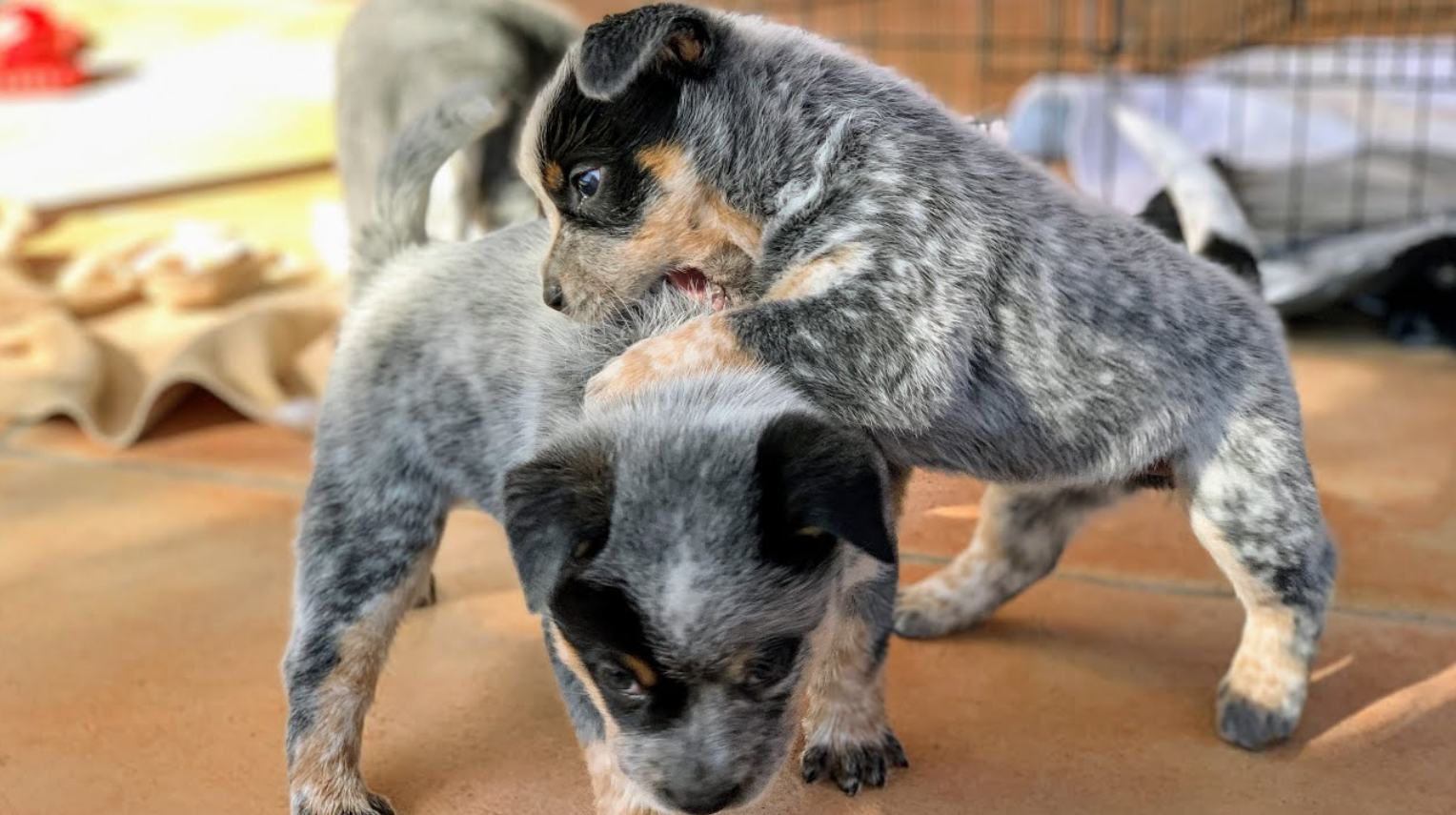
Blue Heeler puppies are cute and cuddly, but training a Blue Heeler puppy can be difficult for inexperienced owners.
If you don’t know about positive reinforcement or click and reward, you may be looking for some help.
Luckily, I’ve got your back with these 7 amazing Blue Heeler puppy training tips.
Blue heeler puppy training can be difficult for inexperienced owners. Check out our tips to make it easy!
7 Brilliant Tips on Training a Blue Heeler Dog
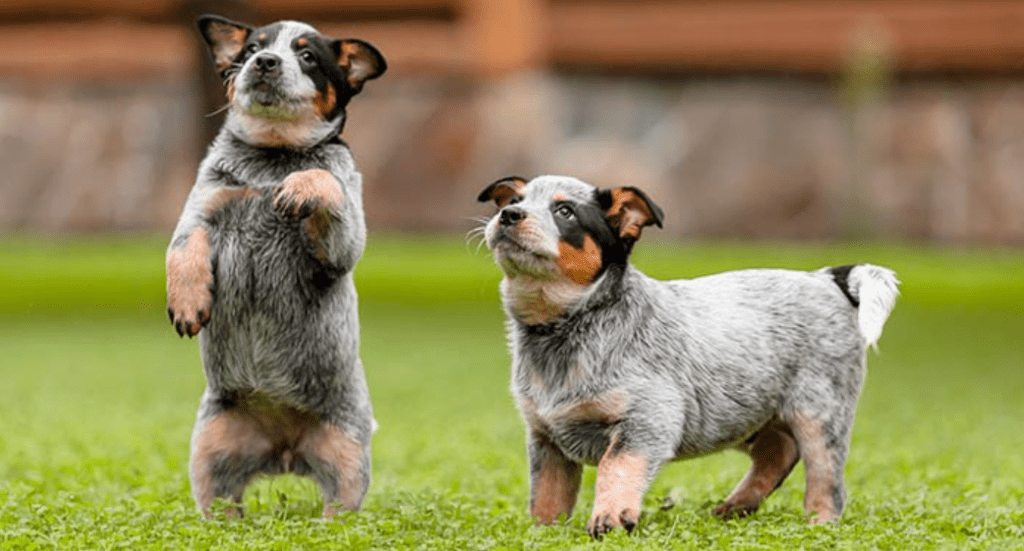
The Blue Heeler Dog, also known as the Australian Cattle Dog, never fails to impress with its blue markings, intelligence, and tenacity.
When it comes to running livestock over rough terrain or high temperatures, it would be hard to find a tougher dog.
Fortunately, Blue Heelers are eager to please their owners, which makes them one of the easiest dogs to train.
Still, it helps if you have some Blue Heeler dog training tricks up your sleeve.
Blue Heeler puppies are cute and cuddly, but training a Blue Heeler puppy can be difficult for inexperienced owners. Check out our tips to make it easy!
#1 Learn about the temperament of the Blue Heeler.
When you’re about to get a Blue Heeler, it’s not enough to just learn how much food to feed your Blue Heeler dog.
You need to understand the temperament of the breed so that you can use its strong points during training.
- Blue Heeler dogs are very energetic animals, and they can run with the herd all day without getting tired.
- These dogs are not couch potatoes, and they are not suitable for people who cannot keep them busy.
- Your Blue Heeler will be happiest when you let them do something.
- Moreover, Blue Heeler dogs are loyal and protective of their family. But they are usually closely related to an individual and become their shadow.
So, you can expect your Blue Heeler puppy to follow you everywhere and demand you to be a part of the action.
These dogs do not do well on their own and can develop separation anxiety.
#2 Expose your Blue Heeler puppy to children and animals
Blue Heelers are naturally suspicious of strangers. They should be because they are herding dogs, and announcing thieves and poachers is part of the job description.
These dogs also prey on cats and other small animals.
Thus, the first step in training your Blue Heeler puppy is socialization.
While there are many ways to socialize your dog, the most important thing is to make the experience a positive one.
A bad impression can shape your Blue Heeler puppy’s adult behavior, so don’t force your puppy when he feels uncomfortable or afraid of something.
Work slowly to overcome any fears and remember to praise and reward.
It is important to introduce your Blue Heeler puppy to children. Otherwise, an adult blue heeler may not know how to treat them and may accidentally injure them.
Some adult dogs may also perceive children as a threat if they have never interacted with children.
As for animals, Blue Heelers get along well with dogs and cats when they are kept together.
But your Blue Heeler may still think the neighbor’s cats are fair game.
#3 Use positive reinforcement.
Since Blue Heelers are herding dogs, they are used to working with their humans. As such, Blue Heelers are easy to train, and they learn commands quickly.
All you have to do is use lots of positive reinforcement whenever your blue heeler puppy does something you want to repeat.
It is important to give the reward immediately so that your Blue Heeler can make the connection between the reward and the action.
You can start training a Blue Heeler puppy at eight weeks of age.
Blue heeler training commands include teaching your dog to respond to their name, come when called, and sit on command.
#4 Set rules and boundaries.
Blue Heelers can be easy to train, but they can still be bossy, willful and stubborn with a timid or inexperienced owner.
- They will break the rules if you show them they can get away with it.
- Therefore, you have to be consistent in how you treat your Blue Heeler dog.
- Before you bring your Blue Heeler home, you should think about what rules you are going to enforce. Your pet will not understand why something was allowed yesterday and why it is forbidden today.
- Besides rules, boundaries are essential for this herd breed because they are curious and adventurous.
- It’s easy to lose such a cute dog if he goes after a squirrel in the park or over a fence to chase a cat.
#5 Biting early
Since Blue Heelers are herding dogs, it’s not surprising that they nip and bite.
However, what you may not know is that these dogs were bred to force herding, and their bites are not that gentle.
So, how do you train a blue heeler dog not to bite?
Some of the more common approaches, such as ignoring your dog or acting out pain, may not work so well with Blue Heelers.
This is because the sounds and movements excite the Blue Heelers, and they can play harder as a result. You are welcome to try them though.
What you want to do is avoid overstimulating your Blue Heeler puppy and divert their attention to a suitable firm toy.
Furthermore, you should teach your Blue Heeler to drop things on command. Dog obedience classes can also be helpful in teaching your dog manners.
#6 Keep your Blue Heelers busy
As I’ve already mentioned, blue heelers are not couch potatoes, and they don’t do well in apartments.
- They are so excitable that many owners wonder when Blue Heelers calm down and stop chasing things.
- The best way to keep a Blue Heeler busy is to give them a herd to manage.
- But if you are not a shepherd or a farmer, you should consider canine sports. These dogs love the challenge of the Treibball, an agile chunky and herding ball.
- In addition to play, you can take your Blue Heeler jogging or hiking once they reach adulthood and their growth plates stop.
- Do not jog your puppy or make them jump over obstacles as this can damage their joints.
- You can keep your Blue Heeler dog busy with interactive toys, obedience training, learning tricks, tug-of-war, puzzle toys, and other dog-friendly games.
#7 End the lesson on a positive note.
Training a Blue Heeler puppy can be tiring at times. However, you have to be kind but firm with your Blue Heeler dog.
These dogs do not do well with harsh treatment and may shy away or retreat if you yell at them during training.
In general, Blue Heelers learn commands very quickly, but you need to keep them interested in the lesson. Otherwise, they will get bored and stop listening to you.
End your training sessions while you’re both still having fun. That way, your Blue Heeler puppy will be eager for the next one.
Size and appearance
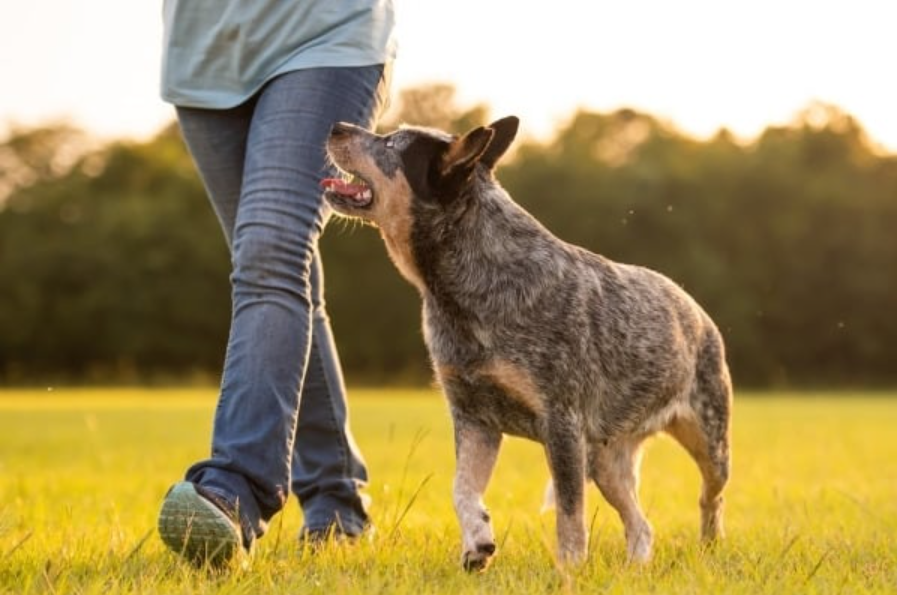
A healthy blue heeler can grow up to 20 inches long when young and weigh between 30 and 50 pounds. Females are slightly shorter than their male counterparts.
Blue heelers also resemble the Australian dingo in that they have upright ears, a balanced body, short fur, and an athletic body. However, Blue Heelers have a more muscular structure, which makes them different and unique. It’s important to note that Australian Cattle Dogs can have floppy ears when they’re puppies but tend to stand up straight and inward by 24 months.
coat
Their coats are perhaps their most distinguishing feature. Blue Heelers have a short, straight coat and can display a variety of different colors. Their undercoat is sometimes even shorter. Their fur is smooth but can be a little rough to the touch. The coat is what protects them from extreme weather conditions such as excessive heat or rain.
the color
Blue Heelers come in two basic shades – blue and red. If a blue heeler has a red shade, they are called a red heeler.
As for patterns and markings, these depend on the fur of the individual dog. The color range and texture is so unique that their coat displays a variety of mixed colors. Some dogs may also have dark fur around their eyes, giving the appearance of a mask.
Blue Heeler temperament
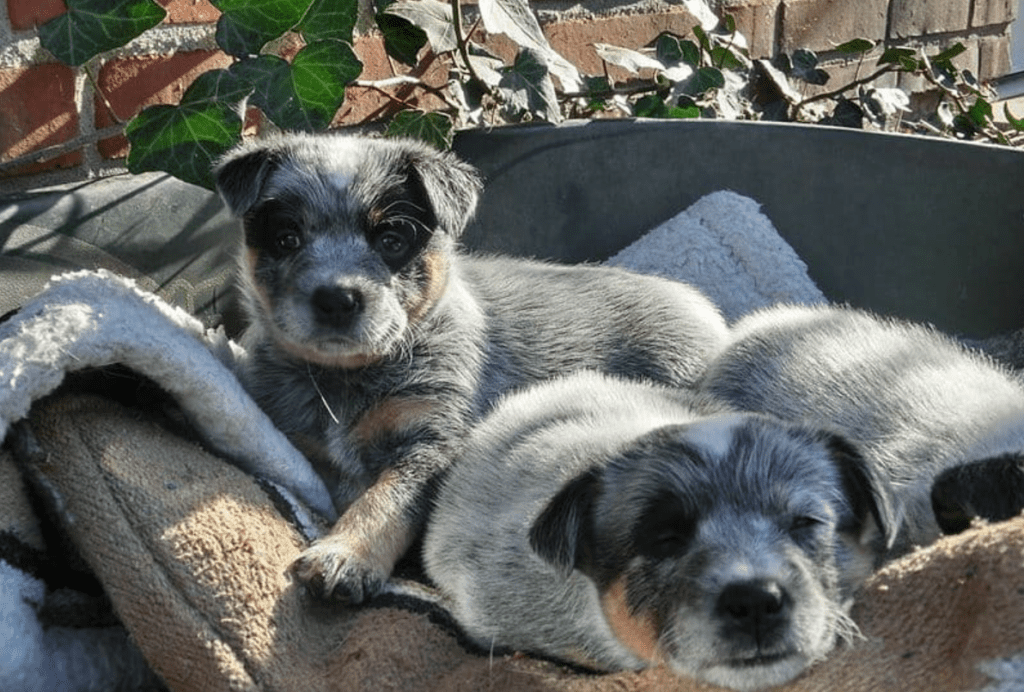
- A dog’s temperament says a lot about their personality. It reflects an individual breed’s natural instincts, their level of cooperation, independence, chasing or guarding tendencies, aggression, and ability to make a good pet.
- As for the Blue Heeler’s temperament, they are a tough breed, both physically and mentally. According to a study published in 2007, Blue Heelers and other cattle dogs can engage in herding sessions for up to four hours in temperatures as extreme as 40 degrees Celsius. They have the energy and ability to cover an average of 20 miles in one session.
- They have a keen sense of herding, which is a testament to their intelligence. However, this instinct can trigger ACD if other household pets or even children are found walking around or running around, which is why it is important to socialize and train your Blue Heeler. Is. To stop this behavior they need to get used to different types of animals and puppies.
It is important to mention that their temperament is influenced by many factors including heredity and training. Dogs can be playful and curious. To understand your dog’s temperament, consider meeting at least one of the parents to make sure they have a personality you like.
If you bring home an adult rescue that is used to herding and gathering, it can be difficult for such dogs to adjust to their new indoor life, especially around children and other pets. Early socialization is the only way to expose your child to different people, experiences, sounds and sights. The best way to ensure well-rounded, well-trained Australian Cattle Dogs is through puppy training and socialization.
Blue Heelers with children and other pets
The Australian Cattle Dog can be a wonderful family pet if trained well. Your dog will do best if raised around children and other pets. Early acceptance and familiarization is essential in the case of the Blue Heeler. If they are raised with a variety of people and animals from puppyhood, they can become very playful and protective.
Since they are mouthy dogs, this can be difficult if you are bringing a new boy into the home. They can sneak and bite while herding to keep them under control. Sharp nips and bites are likely if children try to hold them or play with them.
You can’t expect these dogs to know how to handle children and other small pets. Unless you buy them as puppies and invest in their socialization, they can be very tough. This breed is also very suspicious of children and their behavior. The Australian Cattle Dog can perceive their behavior as a threat and react accordingly. The same is the case with other household animals.
Personality traits
- Australian Cattle Dogs are very active and hardworking dogs that need constant physical and mental activity to stay content. If they are lonely or bored, it is easy for them to become destructive. They can naturally chew, bite and tear things around. If you are choosing this breed as a family dog, make sure you have plenty of playtime, games, toys, and activities for him every single day to keep him occupied and engaged. If he finds an outlet for his energy, he is less likely to get into trouble.
- Australian Cattle Dogs are also very devoted to their owners. Even as a family dog, they are especially close to one person, often the person they spend the most time with. Blue Heelers consider this person “theirs” and will defend them no matter what. Although Blue Heelers are friendly dogs and make excellent pets when trained and well socialized, they are a bit reserved around strangers. Once these dogs bond, it’s a lifelong commitment. Physical separation from their owner is considered punishment for Blue Heelers.
- This intelligent breed is sometimes considered stubborn and willful. Positive, consistent training is the key to controlling the free flow that comes naturally. A lot of early socialization can also help regulate but not completely eliminate hypervigilance toward strangers. So chances are your Blue Heeler will always be wary and awkward around strangers.
Diet and nutrition of the blue heeler
- Because Blue Heelers are active, they need plenty of nutrients to nourish their bodies and overall health. They need high-quality sources of essential nutrients, including vitamins, protein and healthy fats, to complement their active lifestyles and intelligent minds. Choose a complete and balanced diet for your Australian Cattle Dogs.
- It’s equally important to choose a dog’s diet based on their specific life stages. A puppy’s nutritional needs will be different from an adult dog’s.
- As a general rule of thumb, it’s best to get dry kibble for growing dogs that need something to support their dental health. Even at a young age, they have a strong digestive system that can easily break down food with a hard and rough texture. For older dogs, you may consider switching to a canned food diet or adding it as a topper for more flavor and a better texture.
- As for quantity, you should feed your dog based on his size. As a general rule, you will feed your Blue Heeler about 1 ½ to 2 ½ cups of food a day. Individual dietary requirements will vary depending on your dog’s age, activity level and body weight. Amounts will also fluctuate depending on the calorie content of the food you choose. It is best to check the instructions on the package and divide this amount into several meals per day.
- Active dogs like Australian Cattle Dogs need a lot of protein. Beef, chicken and salmon are some great sources of protein. Vegetables and whole grains are also important and should be listed further on the label to ensure you are choosing a high-quality, complete and balanced diet for your dog’s nutritional needs.
- You may also consider supplements for blue heelers. Most of the dog food options available in the market contain additional supplements to help your dog stay healthy and grow well. If you can’t find food with added supplements, consider getting them separately in liquid or pill form and adding them to your dog’s diet. Glucosamine is an excellent supplement that promotes healthy bones and joints.
- Make sure that clean, fresh water is always available to your dog.
Training and exercise requirements
Positive reinforcement is one of the best ways to raise a Blue Heeler puppy to be a loving and friendly family pet. Here are some training techniques to help you get started:
Introduce them to people and other animals.
As soon as you bring a Blue Heeler puppy home, introduce them to people and other animals right away. Socializing them is not only part of their training, but it also makes them happy. These dogs need time to adjust to people outside the family and other animals. With the right training, they will learn to behave well with strangers and animals.
The key is to allow them to spend time outside. These energetic dogs also need a lot of exercise to keep them happy, so taking them outside for walks where they can see as many people as possible and interact with other animals will expose your dog to the world. It’s a great way to introduce. Teach your puppy to be socialized from the start, so that they learn how to interact with people and other animals as they grow.
Be persistent
Consistency is the key to training dogs, especially Blue Heelers. These are smart dogs, so you need to be very patient and consistent with your approach. If you let them get away with bad behavior or breaking a rule, they will do it again.
Set boundaries.
It is important to introduce boundaries to the Blue Heeler. These dogs are very curious and love to explore. They’re also very energetic, so if you don’t set boundaries, they’re likely to break a lot of rules. Training your dog to heel and stay can help you deal with this problem.
Be the boss
These intelligent dogs never miss an opportunity to take matters into their own hands, especially when it comes to their behavior around people. So be the boss. Just because you let that cute puppy go your way during puppyhood, you’ll end up with an adult dog that can live with you. You need to show who’s the real boss, or behavior problems can get worse over time.
Be kind
Positive reinforcement does not require coercion. Disciplining a Blue Heeler is important, but it is equally important to train it positively and kindly. It is very important to have a strong point of view. Don’t forget to reward your beloved hound for all good behavior and training. Dogs respond best to kindness and positivity, and if they appreciate it, they’ll love to please you back.
Lots of exercise
As far as exercise requirements are concerned, Blue Heelers are the perfect dog for someone who can keep their energy levels up and provide them with an outlet that keeps them active, happy and engaged. . If you can’t encourage a lot of exercise for this dog, it’s best to find a dog that requires less exercise and human interaction. These dogs love to play and run. Catching may be their favorite game because it involves running and the goal is to find the ball and bring it back.
- A highly energetic dog is therefore not suitable for living in small spaces. They need plenty of space to move around and be active – just the way they like it.
Basic command training:
There are five essential commands you should teach your dog. It is very important to train your Australian Cattle Dog to understand basic commands. This will help you train your dog to do what you want.
Besides being able to communicate with your dog. Communication is very important in dealing with behavior problems. There are five basic commands.
Sitting:
Keep treats close to your Australian Cattle’s nose.
Start moving your hand upwards, following the treatment to his head. This will lower his bottom.
Once the dog is finally in the sit position, say “sit.” Then treat it. Finally, praise her and share the love.
Repeat.
Come on:
Put a leash and appropriate collar on your blue heeler.
Stand a little away from him.
Sit on its surface and say “come” while gently pulling on the leash.
Once they come to you, reward them with praise and a treat.
Repeat.
below:
Give you a mostly good-smelling treat. Hold it in your fist and close.
Raise your hand to your dog’s nose. Once, your blue healer sniffs it, lower your hand to the floor. He will follow your fist.
Bend your hands on the ground in front of your dog. This will encourage the rest of his body to follow his head.
When he is in the down position, say “down,” reward him with praise and treats.
Repeat.
Accommodation:
- To teach your dog, you’ve already established a command set. These two orders are the same.
- Command your dog to “sit.”
- Open the palm of your hand in front of you, then command your pooch to “stay.”
- Take a few steps back. Once he stays, reward him with treats and praise.
- Gradually increase the steps you take before giving treatment.
- Even if your puppy only stays for a few seconds, always reward and praise him.
Leave it:
- Hold the treat in both hands.
- Show him the treat inside your closed fist, then say “Leave it.”
- Ignore any behavior he will do to get the treat. He can lick, sniff, mouth, paw and bark.
- When he stops trying, give him a treat with your other hand.
- Repeat until your dog pulls away from the first fist when you say, “Leave it.”
- Finally, treat your blue healer only once he looks at you because he stays away from the first fist.
- Repeat, but now place the treat on the floor.
3 ways to house train a Blue Heeler puppy:
1- “Hourly” method:
- To potty train your Blue Heeler, you can choose the easiest method. Take your Australian Cattle Dog/Dog to their potty area as often as you can. In this case, you can use a lot of positive reinforcement.
- Make sure you take your Australian Cattle Dog outside to his or her potty area. Do this every hour.
- Whenever you see your Australian Hound going to pee or poop, say your cue word as a sign.
- Every time your blue heeler does his stuff in the potty area, make sure you offer him praise/reward. This point is very important.
- You should be careful not to reward your dog later or when you are at home. Reward him immediately. This is how you train your Australian Cattle Dog to associate a reward with doing his or her business on the potty. This point is important.
- If your pooch doesn’t do his business in 5-10 minutes, return home. But try again later.
- Technically, sniffing, circling, and whining are signs that tell you when your pooch wants to go. Watch for these signs and take the dog outside.
- Maintaining such a potty training schedule may seem time-consuming and difficult, but it will quickly yield pleasant results.
It trains your Australian cattle to go outside, not inside, by getting a reward. This will help prevent accidents at home.
2- Crate method:
A common mistake that many dog parents make is to give their dog complete freedom to roam the house. Yes, your Blue Heeler puppy should be allowed to roam around your home. But not when you’re not there.
Obviously you can’t see your baby Australian cattle when you’re out and about. This will eventually lead to accidents at home if not dangerous. You’ll go back home to the mess you want to avoid.
- You need to teach your blue heeler that the house is off limits. In fact, the more freedom you give your dog to roam around the house, the harder it will be to establish your goal. Here comes the role of cards.
- It is a common mistake among dog parents to think of crated dogs as cruel and evil. It is actually more beneficial and safer for your dog.
- Crates are considered your dog’s own home. This is the safe place for your Australian cattle. Your dog can have some me time. Just like us humans, dogs need some quality time and a place to escape when stressed.
- Another wonderful thing that crate training can offer is teaching your little friend patience. It trains Australian cattle dogs to hold their bladders. That way they won’t exclude the exact moment they get the urge to do so.
- The point is that your blue heeler’s crate should not be too big. In this case, your Australian Shepherd will only sleep on one side and ignore the other side.
- The crate should be large enough for your dog to sleep in and move around comfortably.
- Now that you’ve found the crate and introduced it to your furry friend, here’s what to do:
- Keep your Australian Cattle Dog in a crate whenever you are not around to supervise them.
Even if you’ve only crated your dog for a few minutes, take him to his potty area when you take him out of the crate.
Give your cue when you see that your puppy is about to discharge.
Be sure to praise and reward your blue heeler after he does his business.
If your Australian Cattle Dog doesn’t do its business, try going for a short walk or go back inside. Then, try after 10-15 minutes.
Repeat.
Do not put bedding or water inside the crate. As long as you are house training your Australian Cattle Dog, you shouldn’t. Unless you’re gone for a long time.
Adding bedding and water can encourage your Aussie pooch to urinate inside the crate.
3- Spray method:
- If other methods did not give results, although it is impossible. Then you’ll want to use a potty training spray. This will encourage your dog to do his business in a specific area:
- Use the potty training spray on the designated potty area.
- Take your Australian Cattle Dog to the spot and wait. If your blue healer doesn’t discharge in 10 minutes, go back inside. Then, try again in 15-30 minutes. See symptoms of a full bladder.
- Again, don’t forget to use positive reinforcement. Be sure to praise and reward your pooch when they do their business outside, in the right place.
Repeat.
Common mistakes to avoid are:
On the subject of Australian Cattle Dog training as a whole, we have collected for you some of the most dangerous mistakes that people commonly make. Here are some common Blue Heeler house training mistakes to avoid:
- Do not punish your Blue Heeler if you see any “accidents”. Aussie dogs in general do not associate punishment with “crime” as dogs. All this punishment scares your dog.
- If your dog goes outside indoors, say, “No!” Or clap your hands. Then take your dog outside.
- Be sure to carefully clean up any accidents. Removing odors is very important. Otherwise, the smell will encourage your dog to excrete around the house. This will increase the chances of unpleasant accidents.
- Do not feed or water your Australian Cattle Dog two hours before bedtime. At the same time, try increasing bathroom breaks. If your dog keeps soiling the crate at night.
- Remember to set realistic expectations and goals. Untrained dogs cannot hold their bladder for long. One way or another, they’ll have an accident when you’re not there to let them out.
How to care for a Heller puppy dog?
Before welcoming a Heeler puppy into your home, it’s important to get an in-depth knowledge of how much care this dog breed requires. In this section, we will cover feeding as well as grooming.
Feeding requirements
- Healers should be fed twice a day. This is because they are very active dogs. In addition, they should be given a diet that contains the right amount of minerals and vitamins for their well-being.
- Look for a brand that doesn’t have many fillers, such as corn meal, bran, or brewer’s rice. A nutritious brand of dog food that caters to medium-sized dogs would be perfect for a Cattle Dog.
- Cattle dogs love to work for everything. Take advantage of this and make your cattle dog work for their food. This will likely keep them busy while providing stimulation at the same time.
Here, there are two ways you can take it. You can either:
- Hide your dog’s food around the house so they can hunt for it or
- You can put treats inside food puzzle toys, like Kong.
In addition to their diet, healers are heavy drinkers, so you must have a water bowl for them. Make sure fresh water is always available. In fact, you should change the water daily.
Frequently Asked Questions:
My healer seems to get bored with his toys very easily. What have you done to combat this? Any advice on what to do?
You should basically rotate the toys over and over again on a daily basis. Also, you should buy him new toys every few weeks. This will help keep the spark alive.
Q: Do cattle dogs usually get along with cats?
Not all CCDs can afford it. However, some Australian Cattle Dogs get along very well with cats. Second, never give up the urge to chase cats.
Q: Are Australian Cattle Dogs Aggressive?
In fact, most owners would say that Australian Cattle Dogs are not aggressive. However, they are very brave and will stand their ground if necessary. So, the answer is no.
Q: Are Australian Cattle Dogs Easy to Train?
Australian Cattle Dogs are very smart. They will get used to the reward system very quickly. In fact, if the reward is food, the CCD will learn incredibly fast. CCD is very easy to train. In fact, they do whatever it takes to please their owners.
Q: Do Australian Cattle Dogs Bark A Lot?
The answer will make you very happy. Australian Cattle Dogs are not very barky. Blue Heelers just don’t bark when there’s a good reason to do so.
Q: How long do blue heelers live?
Blue heelers can live for 12 to 16 years.
Q: What is the cost of Blue Heeler?
Australian dogs are generally expensive dogs, and a Blue Heeler can cost up to $2000.
Q: Can I still get a Blue Heeler if I have other dogs or pets?
Experts recommend introducing the breed to cats or other pets during puppyhood. New animals need to be introduced with extreme caution, preferably using protective fencing. However, adult Blue Heelers are unlikely to live with other pets around the house.
Q: We have a red heeler that is about a year old now. We achieved it in six months. He puts my hands in his mouth and bites so hard! Has your dog ever stopped this behavior?
Unfortunately, no. Our healer still loves to cuddle with our hands but he won’t do it unless: 1. we invite him by signaling cuddle/play time or 2. he’s bored and we bring him. By neglecting to allow some energy to be gained through walking, maneuvering, etc
Q: Why does my healer bite my husband and not me?
It is interesting. I’m not sure I have a good answer for you. My only thoughts are if he sees it as a threat to being the “leader of the pack” – like he’s trying to dominate. Or possibly if she has learned through experience (training, being told yes/no) that she is allowed to bite your husband but not you.
Q: Can using a shock collar stop an Australian Cattle Dog from biting?
We have never tried a shock collar. I used the training technique of simply saying no and then replacing the part of me that he was biting or trying to bite with a toy that he could bite and then gave him lots of encouragement. He stopped biting our ankles at 6 months old. He is now almost 5 and likes to call us “mouth” when we play with him because he/we like to wrestle. So he still bites a little but he only does it when we play, never hard enough to hurt or pierce the skin, and when we say he stops.
Result:
Have you been wondering how to train an Australian Cattle Dog? Well, we provide you with the necessary and basic training. We hope these tips and tricks help you get your ACD on track.
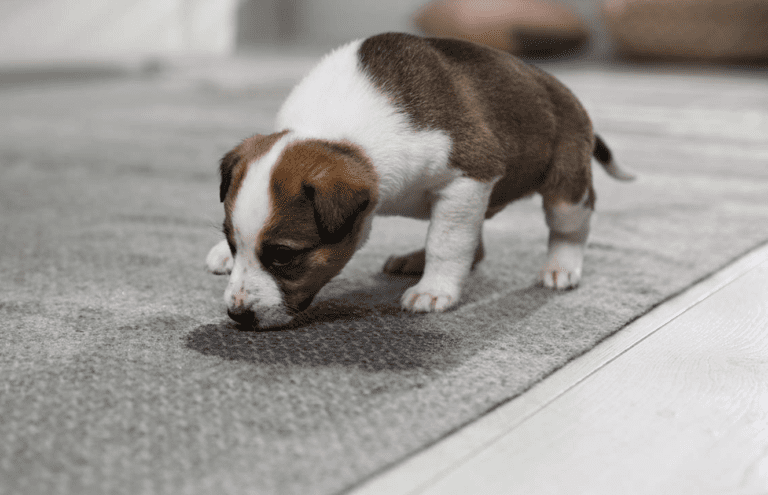
We know how easy it is to get frustrated when you have a dog to train. Especially when you discover that your Blue Heeler has left you with a wet puddle at home. However, following the above methods and repeating them consistently will get you and your furry friend on cool terms.